
2026-04-24
Scoring INFIRMARY
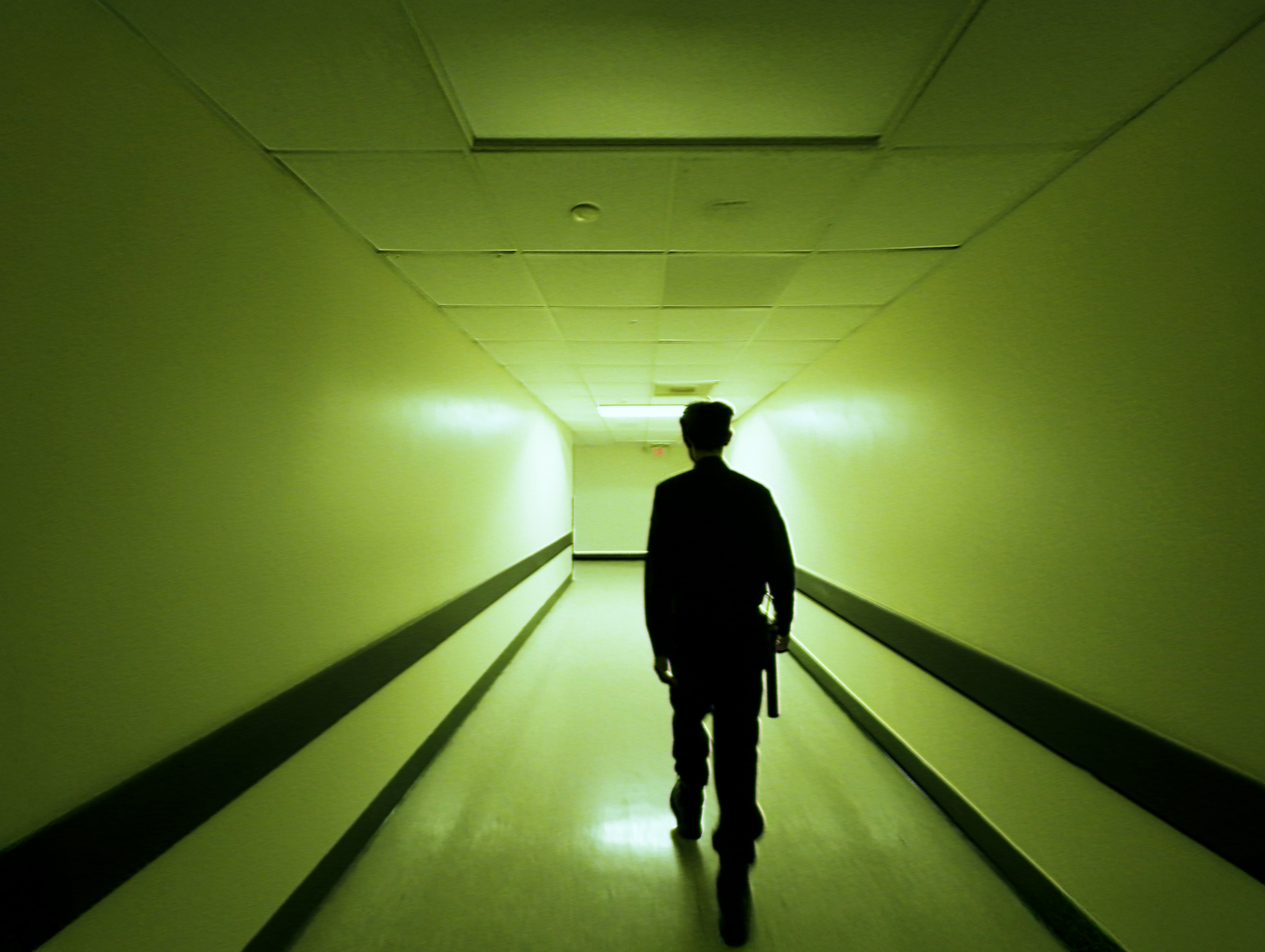
There's a 200,000-square-foot abandoned hospital somewhere in Los Angeles. Nobody involved with INFIRMARY will say where it is — partly because the location is a constant target of break-ins, and partly because the secrecy fits the film perfectly.
Director Nicholas Pineda shot his debut feature entirely inside that building, using body cameras worn by the actors and fixed security cameras already mounted in the walls. The aesthetic was committed, almost confrontational: no traditional cinematography, a story unfolding in real time, two men working a night shift in a place that had clearly seen things it wasn't going to explain.
The brief he gave me was specific: music that could inhabit that space — atmospheric, cinematic, built to match the oppressive scale of a 200,000 square foot abandoned hospital. The score had to carry real emotional weight without overwhelming a film that was already working very hard visually.
Rather than writing to picture in the conventional sense, I thought about what that space might already be producing — and then built something that could exist inside it. The music had to belong to those corridors without disappearing into them.
INFIRMARY premiered at Dances With Films New York and has since screened at the Unseen Footage Festival, the Philip K. Dick Film Festival, and On Vous Ment. The press response has been strong — The Movie Sleuth called it "one of the strongest horror films of the year," The Fright Club described it as "smart and terrifying." The credit on the poster reads: Music by Steve Bolch aka Theatre of Delays.
That line means more to me than it might appear. Getting to bring this work into a film that is genuinely, uncomfortably good — that's not something that happens often.
If INFIRMARY is screening near you, see it in a dark room.